
In 1992, the Clean Vessel Act was signed into law to reduce water pollution by prohibiting vessels from discharging raw sewage into fresh water or coastal saltwater. The act established a federal grant program, administered by the U.S. Fish and Wildlife Service, to fund sewage disposal facilities.
To date, the federal grant program has awarded nearly $246 million to help boaters properly dispose of sewage.
Clean Vessel Act Grant Program
In Florida, the Clean Vessel Act Grant Program is housed within the Florida Department of Environmental Protection. Since 1994, DEP has provided grants to marinas across the state to install pumpout facilities and to purchase pumpout vessels. To further improve water quality in Florida’s waterways, DEP’s Clean Boater Program funds educational programs for boaters through the Clean Vessel Act grant.
Apply for a Clean Vessel Act pumpout grant and learn about DEP training resources.
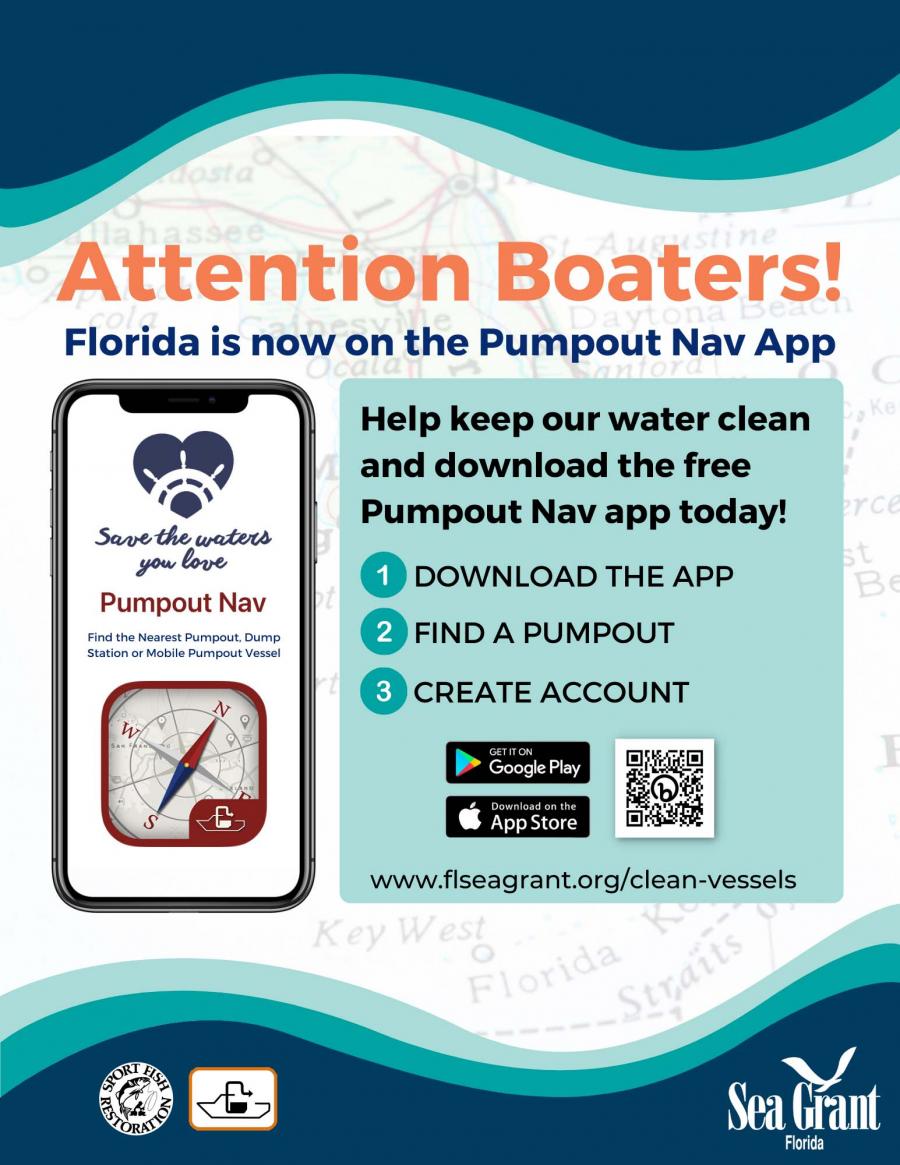
Florida boaters now have access to the free interactive mobile app, Pumpout Nav, available on iOS and Android, to locate over 250 publicly available pumpouts, portable toilet dump stations and mobile pumpout vessels throughout the state. Use the app to:
Pumpout Navigation App flyers are available to print and post at your facility.
The Florida DEP Clean Vessel Act Grant Program, in partnership with the Florida Sea Grant, develops tools and resources that empower the boating community to properly dispose of waste and keep our water clean.
The Build America, Buy America Act was enacted on Nov. 15, 2021, as part of the Infrastructure Investment and Jobs Act (IIJA), Public Law 117-58. With the passage of the IIJA, federal financial assistance projects for infrastructure must comply with domestic content procurement preference requirements established in the “Build America, Buy America Act” at Section 70911 et seq. For more information, see Build America, Buy America presentation. A printable Build America, Buy America fact sheet is also available for download.
None available at this time.
Interested in subscribing to DEP newsletters or receiving DEP updates through email?
Sign UpThe Florida Department of Environmental Protection is the state’s lead agency for environmental management and stewardship – protecting our air, water and land. The vision of the Florida Department of Environmental Protection is to create strong community partnerships, safeguard Florida’s natural resources and enhance its ecosystems.
Learn More