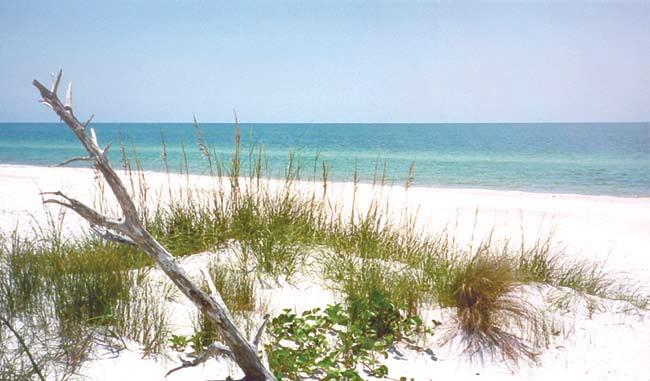


Since colonial times Americans have depended on the coastal areas
for commerce, transportation, food supply, recreation and scenic beauty.
By the late 1960's, more than half the nation's population was located
near the coasts. User groups competed for access to the nation's coastal
resources and conflicts increased dramatically. Recreational fishermen
competed with commercial fishermen. Resorts and residential developments
limited the access previously enjoyed by local residents. Declining
coastal water quality led to closings of shellfish beds and swimming
beaches. Commercial and recreational fisheries declined.
The CZMA requires federal agency activities (i.e., “direct” agency activities) to be fully consistent with a state’s approved coastal management program, unless full consistency is prohibited by federal law. Federal permit and funding decisions (i.e., “indirect” activities) must be fully consistent with the state’s approved coastal management program. Federal agencies comply with these requirements by providing the state with a statement of consistency and the necessary data and information to support the assertion prior to taking a final action on a proposed activity. The information provided to the state in support of the consistency statement must include all information reasonably necessary for the state to determine the project's consistency with its program. The state must concur or object to the consistency of the federal activity according to procedures and timelines in the federal regulations at 15 CFR 930.
Disagreements between a state and a federal agency on the consistency of a “direct” federal activity can be mediated by the Secretary of the U.S. Department of Commerce. If a state determines that a proposed federal permitting or funding activity is inconsistent with the authorities included in the state's approved program, the federal agency is prohibited from granting the permit or funds. In such a case, however, the applicant for the permit or funds may request that the Secretary of the U.S. Department of Commerce override the state’s decision on the grounds that, despite being inconsistent with the FCMP, the proposed action is consistent with the purposes of the Coastal Zone Management Act or is otherwise necessary in the interest of national security.
[top]
FEDERAL
CONSISTENCY IN FLORIDA
The Florida Coastal Management Program (FCMP) was approved by
NOAA in 1981 and is codified at Chapter 380, Part II, F.S. The State
of Florida's coastal zone includes the area encompassed by the
state's 67 counties and its territorial seas. The FCMP consists of a
network of 24 Florida Statutes
administered by nine state agencies and five water management
districts. This framework allows the state to make integrated,
balanced decisions that ensure the wise use and protection of the
state's water, property, cultural, historic, and biological
resources; protect public health; minimize the state's vulnerability
to coastal hazards; ensure orderly, managed growth; protect the
state's transportation system; and sustain a vital economy.
Federal consistency reviews are integrated into other review
processes conducted by the state depending on the type of federal
action being proposed. The
Florida State Clearinghouse, administered by the DEP Office of
Intergovernmental Programs, is the primary contact for receipt of
consistency evaluations from federal agencies. The Florida State
Clearinghouse coordinates the state’s review of proposed federal
activities, requests for federal funds, and applications for federal
permits other than permits issued under Section 404 of the Clean
Water Act and Section 10 of the Rivers and Harbors Act. Consistency
reviews of federal permits issued under those Acts are conducted in
conjunction with wetland resource and environmental resource permits
issued by the Department of Environmental Protection or the water
management districts. The Offshore Projects Unit, also in the Office
of Intergovernmental Programs, coordinates consistency reviews of
federal activities proposed in offshore waters.
Regardless of the process used, the review of federal activities
is coordinated with the appropriate
FCMP member agencies. Each agency is given an opportunity to
provide comments on the merits of the proposed action, address
concerns, make recommendations, and state whether the project is
consistent with its statutory authorities in the FCMP. Regional
planning councils and local governments also may participate in the
federal consistency review process by advising the Department of
Community Affairs on the local and regional impact of proposed
federal actions. Comments provided by regional planning councils and
local governments are considered by the Department of Community
Affairs in determining whether the proposed federal activity is
consistent with specific sections of Chapter 163, Part II, F.S.,
that are included in the FCMP. If a state agency determines that a
proposed federal activity is inconsistent, the agency must explain
the reason for the objection, identify the statutes the activity
conflicts with and identify any alternatives that would make the
project consistent.
As the designated lead coastal agency for the state, the DEP
communicates the agencies’ comments and the state’s final
consistency decision to federal agencies and applicants for all
actions other than permits issued under Clean Water Act Section 404
and Section 10 of the Rivers and Harbors Act. The state’s
consistency decisions on those permits are made through the approval
or denial of the wetland resource or environmental resource permits
issued under Chapter 373, Part IV, F.S.
[top]
To keep the approved FCMP current, the state must periodically
update the statutes that comprise the program after legislative
amendments have occurred. The changes are submitted to NOAA's Office
of Coastal Resource Management for approval, as required by 15 CFR
923.84. The FCMP normally submits the changes on an annual basis,
but can submit them on an as-needed basis if necessary.
[top]
View the most recent Routine Program
Change.