|
Larry Nall - Larry.Nall@dep.state.fl.us
3900 Commonwealth Blvd., MS 235
Tallahassee, FL 32399
(850) 245-2094
The Lake Jackson, Carr Lake and Mallard Pond ecosystem is a valuable biological, aesthetic and
recreational resource of Leon County and the State of Florida. This ecosystem was designated as the
Lake Jackson Aquatic Preserve for the primary purpose of preserving and maintaining the biological
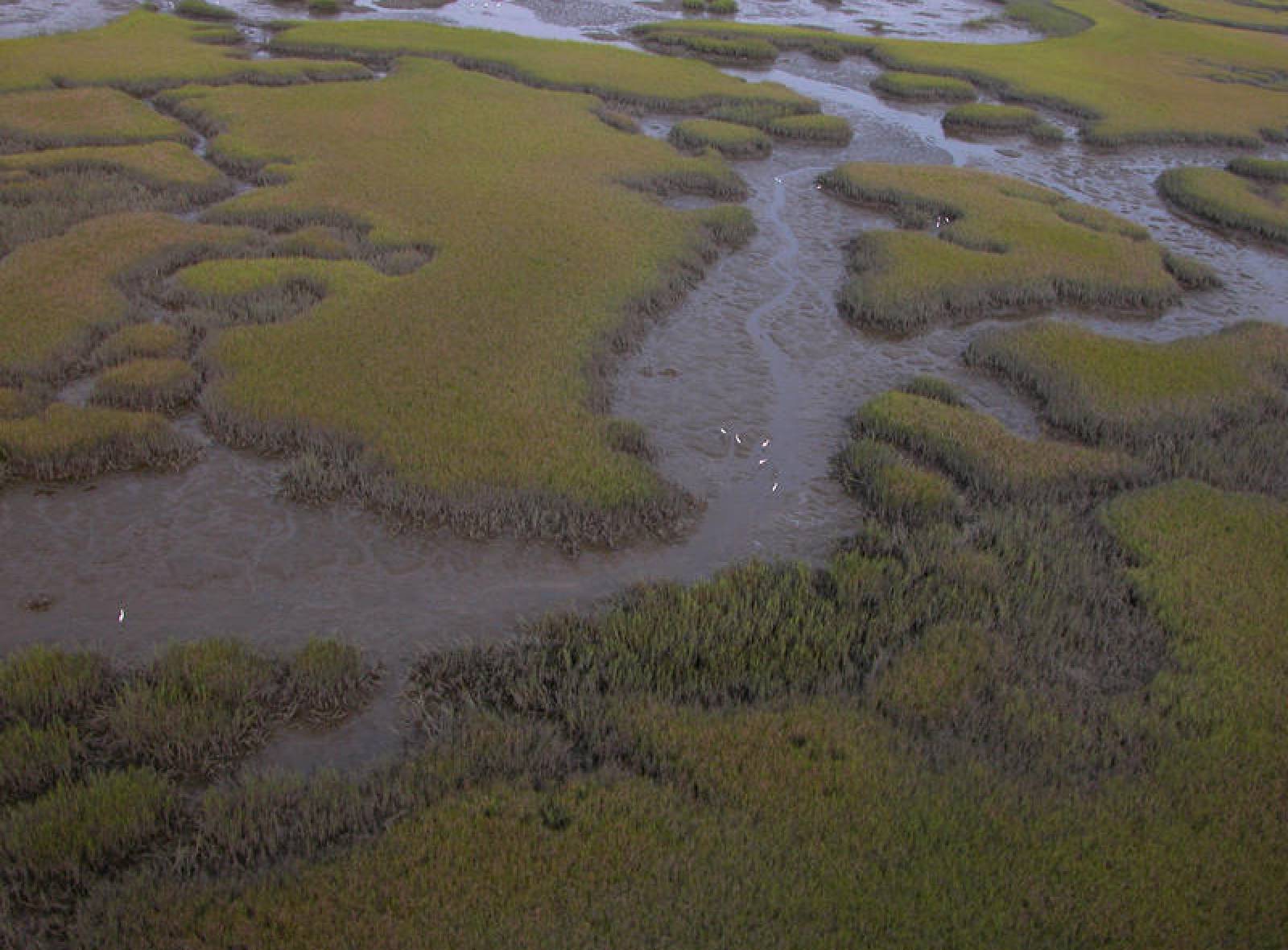
resources in their essentially natural condition. The expansive freshwater marshes and native
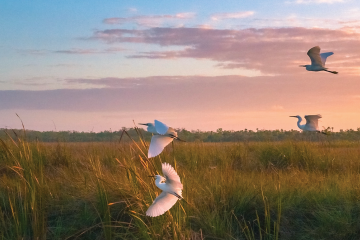
submerged vegetation provide exceptional fish, waterfowl and wading bird habitat. Lake Jackson is
internationally known for sport fishing and its trophy largemouth bass. In addition, the lake
generates several million dollars annually for the Tallahassee and Leon County area.
The Lake Jackson Aquatic Preserve was designated by the Florida Legislature on January 1, 1974.
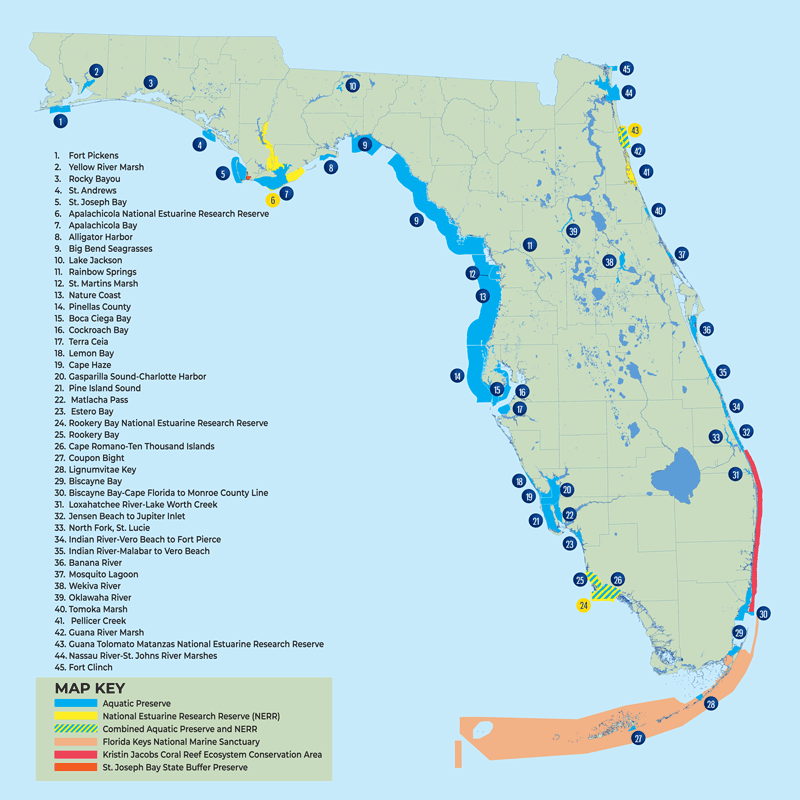
The Lake Jackson Aquatic Preserve, located in northwest Leon County near the state capital of Tallahassee
in Sections 11, 12, 13, 14, 15, 20, 21, 22, 23, 26, 27, 28, 29, 32, 33, 34, 35, Township 02 North, Range
01 West, and Sections 01, 02, 03, 05, 10, 11, 12, 14, Township 01 North, Range 01 West. The aquatic
preserve is accessed by several public landings including U.S. Hwy 27.
The preserve is approximately 4,700 acres in size and includes only the sovereignty submerged lands
located below the ordinary high water line (OHWL). Irregularly shaped, the lake body ranges from one
half mile to three miles in width, and considering an L-shaped configuration, the lake is approximately
8 miles long.
Because of the steep hills in the region, numerous sub-basins are formed within the complete drainage
area of the lake. The three major basins are the southern watersheds draining into Megginnis and Fords
Arm, and an area draining into the northeastern segment of the lake via Ox Bottom Creek. These and other
sub-basins comprise a Lake Jackson drainage area of approximately 43.2 square miles.
Submerged vegetation is abundant throughout the lake because of its general shallowness and relatively
good water clarity. Increased nutrients have also produced accelerated growth, as evidenced by the rapid
expansion of the submerged exotic plant hydrilla (Hydrilla verticillata). Major native species
occurring throughout the lake include blue hyssop (Bacopa caroliniana), coontail (Ceratophyllum
demersum), green fanwort (Cabomba caroliniana), variable-leaf milfoil (Myriophyllum
heterophyllum), and bladderworts (Utricularia spp.) The submerged vegetation provides a base
for epiphytic algae and phytophilic invertebrates, and as habitat for small fish.
Populations of emergent vegetation comprising the broad marsh regions of the lake. This area ranges from
being totally to periodically inundated, with some species able to inhabit merely damp conditions and some
existing for lengthy periods totally submersed. Major species found here include maidencane (Panicum
hemitomon), pickerelweed (Pontederia cordata), American lotus (Nelumbo lutea), and slender
spikerush (Eleocharis baldwinii). These species include stabilize sediments, and assimilate nutrients
entering the lake from runoff and leachate. The vegetation also contributes detritus and is used as spawning
and cover for fish, reptiles, amphibians and some mammals. Birds utilize this habitat for nesting, loafing
and foraging. Also, this community adds much to the scenic beauty of the preserve shoreline.
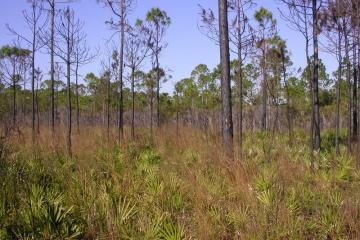
Numerous wetland tree and woody plant species also inhabit the drier portions of the transitional marsh.
These include sweetgum (Liquidambar styraciflua), oak (Quercus spp.), wax myrtle (Myrica
cerifera), dog fennel (Eupatorium spp.), and elderberry (Sambucus canadensis). These
species provide wildlife habitat, filter stormwater runoff and cool nearshore waters.
Algae grow in sediment, drift or float on the water column, or are attached to larger vegetation and
structures such as docks. They can become noxious in a lake if they grow to enormous populations, often
termed an algal "bloom". Blooms may discolor surface waters, form floating scum, and cause fish
kills (Haynes, 1988). Two of the more prevalent macroalgae found in Lake Jackson are musk grass
(Chara spp.) and stonewort (Nitella spp.). Musk grass is found in moderate to sparse growth
primarily in the middle portions of the lake. It is a favorable plant as food for waterfowl, and provides
good habitat for invertebrates and small fish. Stonewort is moderately established throughout the lake and
is also propitious as habitat for invertebrates. A number of filamentous algae also occur in the preserve,
including the potentially noxious blue-green species known as Anabaena spp. Due to the
hypereutrophic conditions in the Megginnis and Fords Arm portions of the lake, numerous blooms have
already taken place. These algae possess the ability to fix and store nitrogen for growth, and outcompete
other vegetation. Therefore, extensive blooms threaten the viability of the resource as an optimal
ecosystem. Other algae present include water-silk or Spirogyra spp., Pithophora spp.,
Hydrodictyon spp., and many more.
Various species of exotic vegetation have been introduced into the preserve within the last 10 to 20 years.
Many of these have become quite abundant in the lake by out-competing native vegetation. This vegetation
can be an impediment to boat traffic and contributes eutrophication through sedimentation and oxygen
depletion. Some of these species grow so rapidly that herbicide and biological control methods have had to
be utilized to control them. The three most prevalent exotic plants in the lake are hydrilla (Hydrilla
verticillata), water hyacinth (Eichhornia crassipes), and alligatorweed (Alternanthera
philoxeroides).
The water quality of Lake Jackson varies relative to inflow from the various sub-basins within the whole
of the watershed. Runoff from the extensively developed sub-basins of Fords Arm and Megginnis Arm have a
marked increase in many types of pollutants entering the southern portion of the lake. Water quality in
the middle and northern sections is relatively good because much of the north shoreline and watershed areas
consist of forested and agricultural land. Suburban development, however, is increasing in that region.
Water quality studies of the lake have documented the degraded condition of Megginnis Arm and Ford's Arm,
and relative good quality of the main lake body. Livingston (1988) states in his interim report entitled
The Ecology of Lake Jackson, "Lake Jackson is undergoing serious problems due to the input of
nutrients and toxic substances by postulated stormwater runoff from multiple sources." Clearly, the
nutrient loading from urban runoff has been a major cause of water quality problems, stimulating inordinate
macrophyte growth and blue-green algae blooms in many areas of the lake, characteristic of hypereutrophic
conditions (Laws, 1984).
Lake Jackson has long been recognized as an excellent sport fishing resource. The natural periodic water
level fluctuations or "dewatering or "drawdown"" are considered a positive occurrence
for the rejuvenation and relative abundance of fish. For example, the numbers of species collected in a
study by the Florida Game and Fresh Water Fish Commission (FGFWFC) from 1985-1987 more than doubled the
number observed before the last (1983) natural drawdown. Before a severe drawdown in 1956, the lake was
well known for its large bluegill catches. Following the refilling in 1958, it began and has maintained
its stature as a trophy largemouth bass lake.
Rare / Endangered Species
Common Name |
Scientific Name |
State |
Federal |
| |
|
|
|
Reptiles |
|
|
|
| American alligator |
Alligator mississipiensis |
SSC |
T (s/a) |
| |
|
|
|
Birds |
|
|
|
| little blue heron |
Egretta caerulea |
SSC |
n/a |
| snowy egret |
Egretta thula |
SSC |
n/a |
| bald eagle |
Haliaeetus leucocephalus |
T |
E |
| wood stork |
Mycteria americana |
E |
E |
| least tern |
Sterna antillarum |
E |
n/a |
| |
|
|
|
Mammals |
|
|
|
| round-tailed muskrat |
Neofiber alleni |
n/a |
UR |
State listings are taken from the Florida Fish and Wildlife Conservation Commission or as with plants,
Florida Department of Agriculture. Federal listings are taken from the United States Fish and
Wildlife Service. E= Endangered; T= Threatened; T (s/a)= Threatened due to similarity in appearance;
SSC= Species of Special Concern; UR= Under review; n/a= information not available or no designation listed
Lake Jackson is a shallow, flat bottomed water body with two major depressions or sink holes,
approximately 28-feet in depth. The lake is a closed basin system, with no outflow from streams or runoff.
It is bounded by steep hills, especially on the north and west shorelines, and receives the majority of
inflow from three more gently sloping south and east watershed areas.
The lake is situated in a broad physiographic region known as the Northern Highlands, which extends from
the eastern big bend west to Alabama. It is located more particularly in the Tallahassee Hills region,
which is a land form of high elevation (215 to 230 feet above sea level).
Water levels and circulation in Lake Jackson are dependent on the measure of inflow in correlation to
outflow in the surface area. Historically, the lake has fluctuated discernibly from periods of being dry
to a maximum elevation of 96.16 feet above sea level. The elements producing inflow are rainfall, surface
water runoff, and ground water discharge from the water table to the lake basin. Outflow is determined by
transpiration of water by vegetation, evaporation from lake surface and leakage into the ground water
system from the lake bottom.
The sinkholes are often a source of extreme water loss in the lake. Water drains from the lake into the
Floridan Aquifer through sinkholes in the bottom. The sinkholes are generally partially or completely
plugged with sediments, but collapse when groundwater levels drop, allowing lake water to funnel into the
aquifer, often drawing the lake down extremely.
Lake Jackson has been the center of much of the history of Leon County. The visible remains of a
relatively advanced Indian culture and some of the plantation period improvements can still be seen.
Lake Jackson Mounds an
81-acre state archaeological site is managed by the Florida Park Service. On its shores lived some of
the state's most important historical figures like Richard Keith Call, Colonel Robert Butler, Sid Cooper
and Governor Thomas Brown. The lake and lands surrounding it are some of the state's greatest historical
resources.
The preserve is almost entirely used for recreational boating, fishing, hunting and skiing with an increase
in jet skiing. Public access points include 10 boat launching facilities, many of which have park-like
settings for picnicking and related activities. Private uses are reflected in the many docks and piers
associated with single-family residences. The primary commercial value of the preserve springs from its use
as a sport-fishing and recreational boating resource and include two commercial bait and tackle stores. One
subaqueous natural gas pipeline crosses the lake at the northern portion of Megginnis Arm. A large
stormwater treatment facility located on Megginnis Arm was designed and constructed by the Northwest Florida
Water Management District.
A variety of land uses, infrastructure and ownerships surround the lake. The south and east shorelines are
predominated by residential development . Portions of the north shoreline have undergone recent single
family home development, while a large estate known as Ayavalla Plantation abuts the north and west
shorelines.
In the past twenty years, however, water quality of the lake has suffered a severe decline because of
intense and accelerated development within its watershed. Developments have increased stormwater runoff,
prompting excessive nutrient enrichment of the lake, which in turn has accelerated the growth of
macrophytes, algae, and has increased growth of exotic vegetation such a hydrilla. Hydrocarbons, heavy
metals and levels of sediments have increased as a result of stormwater runoff into the lake.
The fundamental laws providing management authority for the Lake Jackson Aquatic Preserve are contained
in Chapters 258 and 253, Florida Statutes (F.S.). In particular, Chapter 73-534, Laws of Florida,
establishes the Lake Jackson Aquatic Preserve and defines the basic management principles for the
preserve. Chapters 18-20 and 18-21, F.A.C., are the two administrative rules directly applicable to the
uses of aquatic preserves specifically, and submerged lands in general. The Lake Jackson Aquatic Preserve
Management Plan was adopted July 23, 1991.
In addition to being an aquatic preserve, Lake Jackson is designated as a surface water improvement water
body (SWIM) water body and an outstanding Florida water.
Bowman, J. Ed, and D. Esry. 1984. Lake Jackson Clean Lakes Restoration Project. NWFWMD. Prepared for
Florida Department of Environmental Regulation. EPA grant no. S004437010. 58 pp.
Dobbins, Daniel A., and R.W. Rousseau. 1981. Lakes Talquin and Jackson investigations. Final Report.
D-J Fed. Aid Project F-31-7. Florida Game and Fresh Water Fish Commission. Tallahassee, Florida.
Dobbins, Daniel A., E. Long, B. Lubinski, and J. Nordhaus. 1987. Final Report For Investigations Project
Ochlocknee River Watershed Studies. Florida Game and Fresh Water Fish Commission. 99 pp.
Esry, Donald H., and D.J. Cairns. 1988. Effectiveness of The Lake Jackson Restoration Project For Treatment
Of Urban Runoff. 1988 Annual Meeting of the ASCE - Florida Section. Northwest Florida Water Management
District. 15 pp.
Florida Department of Natural Resources. 1985. An Ordinary High Water Line Survey of Lake Jackson, Leon
County. Bureau of Survey and Mapping.
Harris, R.C. and R.R. Turner, 1974. Lake Jackson investigations. Final completion report, Dingell-Johnson
Project F-12-15. Florida Game and Fresh Water Fish Commission, Tallahassee, Florida. 300 pp.
Landing, William M. 1989. Chemical Analysis of Sediments in Megginnis Arm, Lake Jackson: Preliminary
Report. Prepared for Northwest Florida Water Management District. 072789. pp. 1,2,5.33 and 7.1.
Livingston, Robert J. 1988. The Ecology of Lake Jackson: An Interim Report. Center for Aquatic Research
and Resource Mgt. Florida State University. Special publication Series No. 88-01. 78 pp.
Macmillan, Tyler L., and D.J. Cairns. 1989. Management and Restoration of Lake Jackson. Northwest Florida
Water Management District. Water Resources Report 89-2. 38 pp.
Northwest Florida Water Management District. 1988. Surface Water Improvement and Management Plan for Lake
Jackson Watershed. Draft Copy.
Rivers, E.G. and C.J. Allen, 1975. Silt Barriers As A Control For Erosion Pollution In A Large Recreational
Lake. Proc. Annual Meet. Red. Transportation Research Bd., Committee on Roadside Environment. pages 7-8.
Smith, Hank. 1989. Vertebrate Wildlife Resources in and Surrounding Lake Jackson. Special Report. Dept. of
Natural Resources. 26 pp.
Smith, S.L. 1975. Standing Crop, Success and Harvest in a Trophy Bass Lake, Lake Jackson, Florida. Proc.
Ann. Conf. SE. Assoc. Fish Wildl. Agencies. 29:135-141.
Wanielista, Martin P. H. Harper, and S.S. Kuo. 1984. Bottom Sediments Megginnis Arm, Lake Jackson,
Tallahassee, Fl., A Final Report: College of Engineering, University of Central Florida. pp. 1-19.
Wagner, Jeffrey R. 1984. Hydrogeological Assessment of the October 1982 Draining of Lake Jackson. Northwest
Florida Water Mgt. District. Water Res. Rep. 84-1. 43 pp.
|