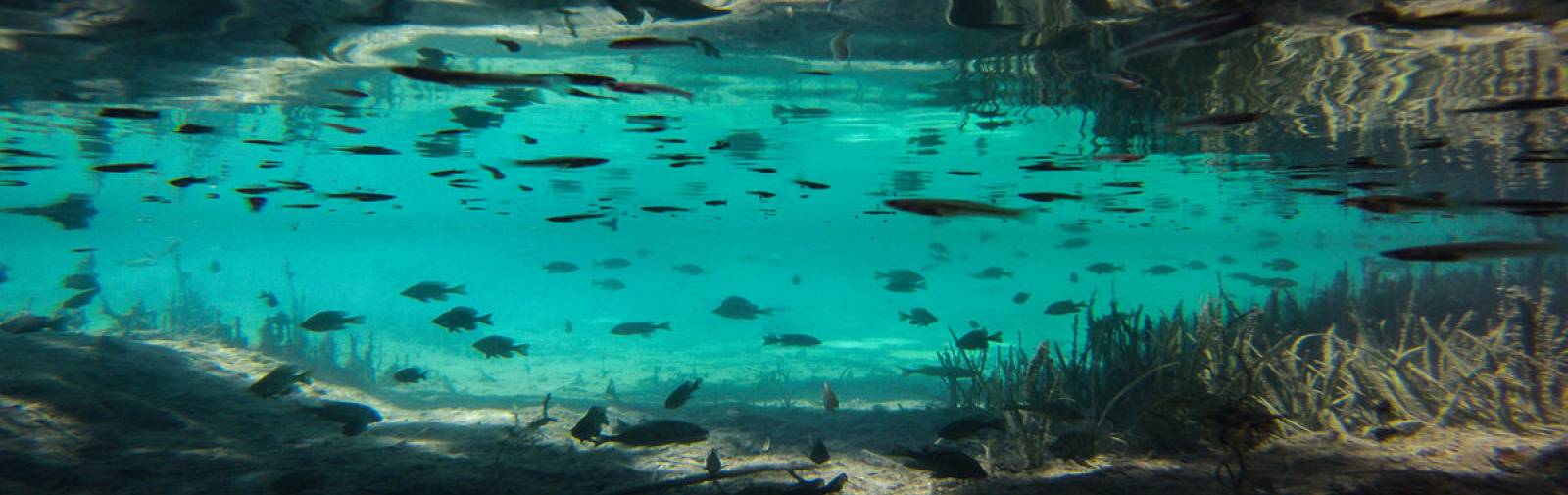
Florida is home to more large (first- and second-magnitude) springs than any other state in the nation. Springs are the window into the health of our groundwater, which is the source of 90% of drinking water for Floridians. Some springs support entire ecosystems with unique plants and animals. They also flow into rivers dependent on the spring’s clean, fresh water. Additionally, Florida’s springs offer many recreational opportunities such as swimming, kayaking and diving; attract visitors from all over the world; and serve as economic drivers for our communities.
Florida's springs face various complex threats, including decreasing spring flows and excessive nutrients. Spring flows decrease because of declining water levels in the groundwater aquifer that sustains them, and excessive nutrients, mainly nitrate, can lead to algal growth and habit degradation. Florida is committed to investing in nitrate-reducing capital projects (wastewater, stormwater and nonpoint source pollution control projects) and water-quantity projects to protect and restore springs as well as in conserving and acquiring land in spring recharge zones to prevent nitrate contamination.
The state of Florida has made an unprecedented financial commitment to springs restoration, funding nearly $268 million over the last four years specifically for springs restoration. This record funding has enabled the department to assist local governments and other stakeholders to identify and construct projects that are imperative to achieving restoration goals.
Much has been done to date; however, there is more work to be done for springs restoration and long-term protection. All of the Outstanding Florida Springs – historic first-magnitude springs as well as De Leon, Peacock, Poe, Rock, Wekiwa and Gemini – that are impaired lie within areas covered by a basin management action plan that is either adopted or currently being developed. A restoration plan is a comprehensive set of strategies to reduce or eliminate pollutant loadings and restore particular waterbodies to health.
In 2016, the Florida Legislature identified 30 Outstanding Florida Springs that require additional protections to ensure their conservation and restoration for future generations. These protections are outlined in water quality restoration plans, known as Basin Management Action Plans (BMAPs). These plans are focused on reducing nitrogen pollution impacting the water quality of these springs. In June 2018 DEP adopted 13 restoration plans, addressing all 24 nitrogen-impaired Outstanding Florida Springs.
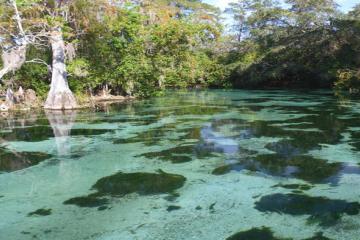
The Division of Environmental Assessment and Restoration establishes water quality standards, monitors water conditions and works with local stakeholders to restore water quality in Florida's springs.
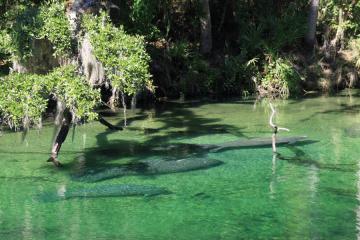
Springs offer visitors unsurpassed locations to swim, snorkel, scuba dive, and observe wildlife. Learn about the wealth of recreational opportunities available at springs and locate a spring near you.
The Office of Water Policy addresses statewide water management in coordination with water management districts and other agencies, including minimum flows and levels for Florida’s water resources.
None available at this time.
None available at this time.
Interested in subscribing to DEP newsletters or receiving DEP updates through email?
Sign UpThe Florida Department of Environmental Protection is the state’s lead agency for environmental management and stewardship – protecting our air, water and land. The vision of the Florida Department of Environmental Protection is to create strong community partnerships, safeguard Florida’s natural resources and enhance its ecosystems.
Learn More